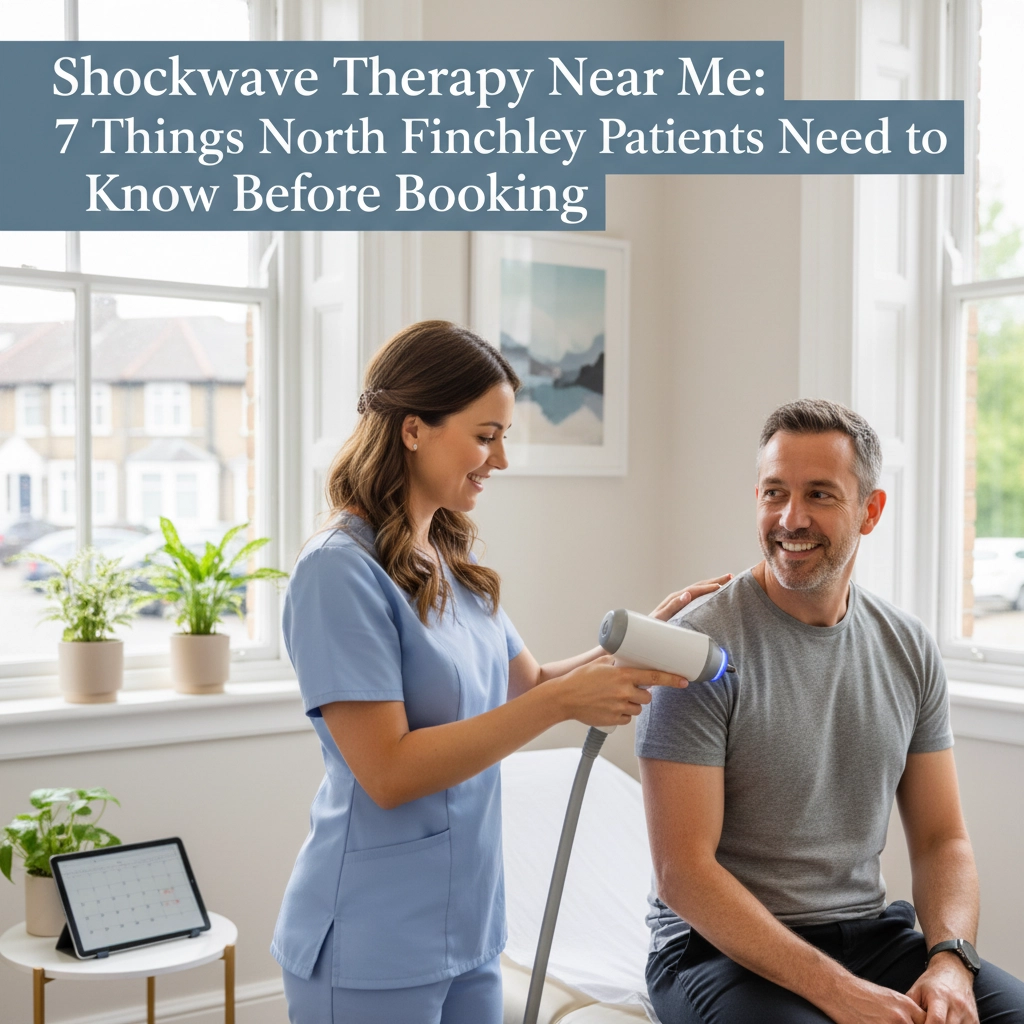
Hey there! So you've been hearing whispers about shockwave therapy and wondering if it might be the answer to your stubborn pain issues? Maybe your mate Dave swears it fixed his plantar fasciitis, or perhaps your physio mentioned it as an option for that tennis elbow that just won't quit.
Well, you've come to the right place! As someone who's seen countless patients walk through our doors at Compass Health Clinic asking these exact questions, I thought it was about time we had a proper chat about what shockwave therapy actually involves – no medical jargon, no scary stuff, just the straight facts you need to know before booking your first session.
1. It's Not as Scary as It Sounds (Promise!)
First things first – let's bust the biggest myth right out of the gate. When people hear "shockwave therapy," they often picture something straight out of a sci-fi movie. But here's the thing: it's actually a pretty gentle, non-invasive treatment that's been helping people heal for decades.
Think of shockwave therapy as your body's personal cheerleader. It delivers high-energy acoustic waves (fancy term for sound waves) to damaged tissues, basically giving them a gentle wake-up call. These waves stimulate your body's natural healing processes by increasing blood flow, reducing inflammation, and encouraging tissue regeneration. It's like giving your cells a little pep talk: "Come on team, let's get this healing show on the road!"
The whole process is completely non-surgical – no needles, no cuts, no invasive procedures. Just targeted sound waves doing their thing to help your body remember how to heal itself properly.

2. You're In It for the Long Haul (But It's Worth It!)
Now, before you start thinking this is a one-and-done miracle cure, let me set the record straight. Shockwave therapy works best when sessions are delivered approximately one week apart, and most injuries require a minimum of three sessions.
So when you're planning your treatment, you'll want to make sure you're available for three consecutive weeks without skipping a session. I know, I know – life gets busy, and committing to three weeks of anything can feel like a big ask. But trust me on this one: consistency is key for optimal results.
Here's what's really interesting though – while some of our patients experience improvement almost immediately (like, walking out of their first session feeling noticeably better), others may take several weeks to respond. The overall benefits typically become apparent after 6-8 weeks, which means you might need to be a little patient with the process.
Think of it like going to the gym – you wouldn't expect to see major muscle gains after one workout, right? Same principle applies here. Your body needs time to do its healing magic.
3. Time to Have a Chat with Your Medicine Cabinet
Here's something super important that catches a lot of people off guard: you need to stop taking NSAIDs two weeks before your first session. Yep, that means no ibuprofen, no naproxen, none of those go-to anti-inflammatory medications that you might usually reach for when things get uncomfortable.
I know what you're thinking – "But those are the things that actually help with my pain!" And you're absolutely right, they do help. But here's the thing: they can actually interfere with the treatment's effectiveness. The inflammation response is part of how shockwave therapy works its magic, so we don't want to suppress that process.
You'll also need to avoid these medications throughout the entire duration of your treatment. And while we're on the topic of timing – if you've had a steroid injection for the same problem in the last 12 weeks, that's actually a no-go for shockwave therapy. Your body needs some time to clear those medications before we can get started.
4. Not Everyone's Invited to This Party (And That's Okay!)
Much as we'd love to help everyone who walks through our doors, shockwave therapy isn't suitable for absolutely everyone. It's nothing personal – it's just about keeping you safe and making sure we're using the right treatment for your specific situation.
You'll need to give this treatment a miss if you're pregnant, currently being treated for cancer, have an infection or wound at the treatment site, or have had a steroid injection within the previous six weeks. We also can't use shockwave therapy if you have a blood clotting disorder, take blood thinning medications like warfarin or daily aspirin, have a nerve disorder, or have metal pins or plates in the treatment area.
If you've had any kind of bone cancer, that's also on the contraindication list. I know this might seem like a lot of restrictions, but these guidelines exist to keep you safe and ensure we're not causing any unintended harm.
The good news? For most people dealing with stubborn tendon issues, plantar fasciitis, or similar conditions, shockwave therapy can be an absolute game-changer.

5. What Does It Actually Feel Like? (The Million-Dollar Question!)
Alright, let's talk about the elephant in the room – does it hurt? The honest answer is: it depends, but most people tolerate it really well.
Most of our patients describe the sensation as small pulses against the skin. Some find it a bit uncomfortable – kind of like someone tapping on your skin with a firm but not aggressive rhythm. Others barely notice it at all. The great thing is that your therapist can adjust the treatment intensity based on your individual response and tolerance levels.
We're not in the business of making people suffer unnecessarily! If it's too uncomfortable, we can dial it back. The goal is therapeutic benefit, not testing your pain tolerance.
After treatment, you might notice some redness or swelling in the area – this is totally normal and usually settles down after a few days. Some patients experience a brief increase in pain immediately following treatment, but this typically resolves quickly. Think of it as your body's way of saying, "Hey, something's happening here!" rather than a sign that anything's wrong.
There is an extremely small risk of tendon rupture or damage to soft tissues following treatment, but the potential benefits far outweigh these minimal risks for most patients.
6. Let's Talk Money (Because We're All Adults Here)
Nobody likes surprises when it comes to healthcare costs, so let's get this sorted upfront. In the London area, you're typically looking at around £140 per session, or about £395 for a package of three sessions.
Since you'll need multiple sessions to get the full benefit, I'd recommend budgeting for at least three treatments from the get-go. Some clinics might offer different pricing structures, and the good news is you don't necessarily need private medical insurance to access this as a self-pay patient.
I know it's not pocket change, but when you consider the potential alternative – months or even years of ongoing pain, time off work, or the cost and recovery time of surgical interventions – many patients find it represents pretty good value for money.
7. You Can't Just Rock Up and Ask for Shockwave (Sorry!)
Here's something that surprises a lot of people: you can't simply call up and book straight into shockwave therapy. And honestly? That's actually a good thing, even if it feels like an extra hoop to jump through.
You'll need an initial assessment with a musculoskeletal specialist first. This isn't us being difficult – it's about making sure you're getting the right treatment and that shockwave therapy is actually the best option for your specific situation.
During this assessment, we'll take a full medical history, have a proper look at what's going on with your pain, and make sure there are no contraindications that would make the treatment unsafe for you. Sometimes we discover that there's actually a simpler solution, or that a combination of treatments would work better than shockwave therapy alone.
Think of it as getting the full picture before we start any treatment. We want to make sure we're not just treating symptoms, but actually addressing the root cause of your problem.
Ready to Take the Next Step?
Look, I get it – dealing with persistent pain is frustrating, especially when you feel like you've tried everything. The good news is that shockwave therapy has helped countless patients get back to doing the things they love, pain-free.
If you're dealing with stubborn plantar fasciitis, tennis elbow, shoulder pain, or other tendon-related issues that just won't seem to heal properly, it might be worth having a conversation about whether shockwave therapy could be right for you.
The team at Compass Health Clinic are always happy to answer your questions and help you figure out the best path forward. We're not about pushing treatments you don't need – we're about finding solutions that actually work for your specific situation.
Ready to explore your options? Give us a call or drop us a message. We're here when you're ready to take that next step towards feeling better.